
Exception reporting is a very powerful way to quickly identify problems in a large portfolio of work. Executives like calendars and they love colors! The Due Date Calendar has both; it cuts through the clutter and quickly identifies any exceptions and problems across all work going on in the organization.
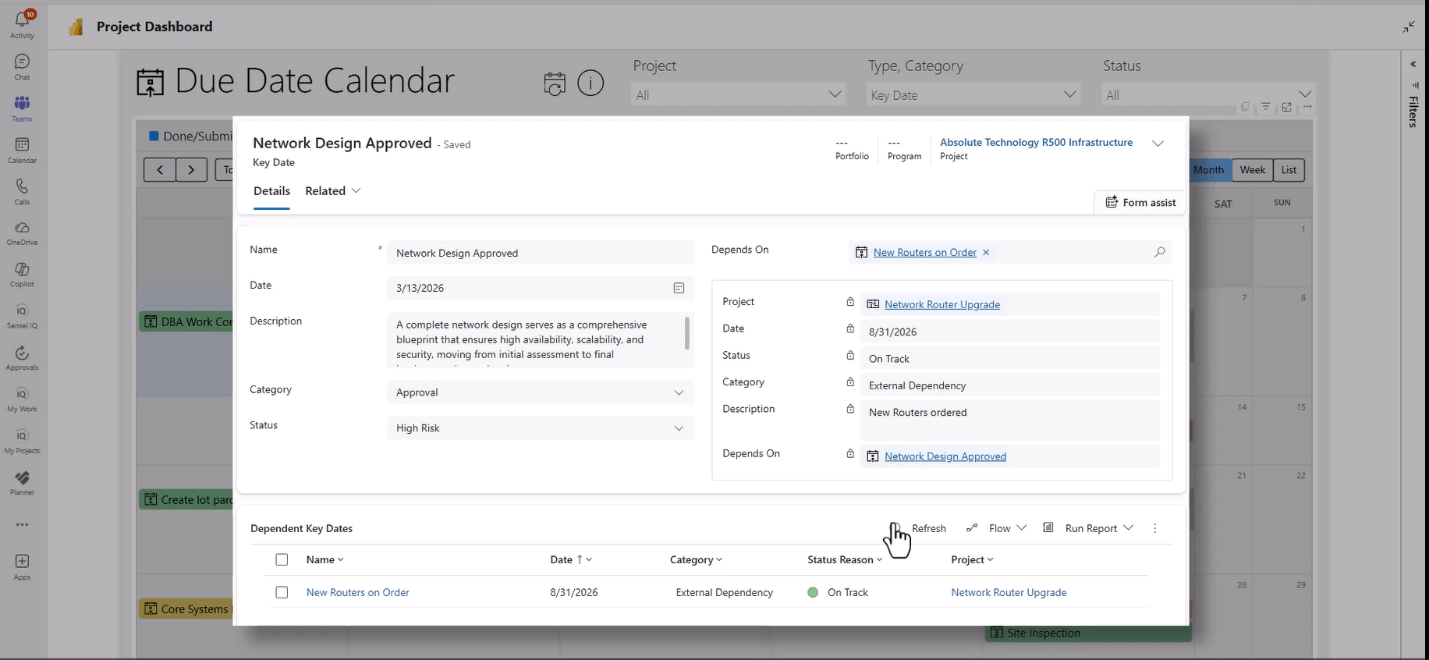
Key Dates are typically target dates given to project managers, or they are other important events that need to be monitored closely, although anything with a due date can be monitored here.
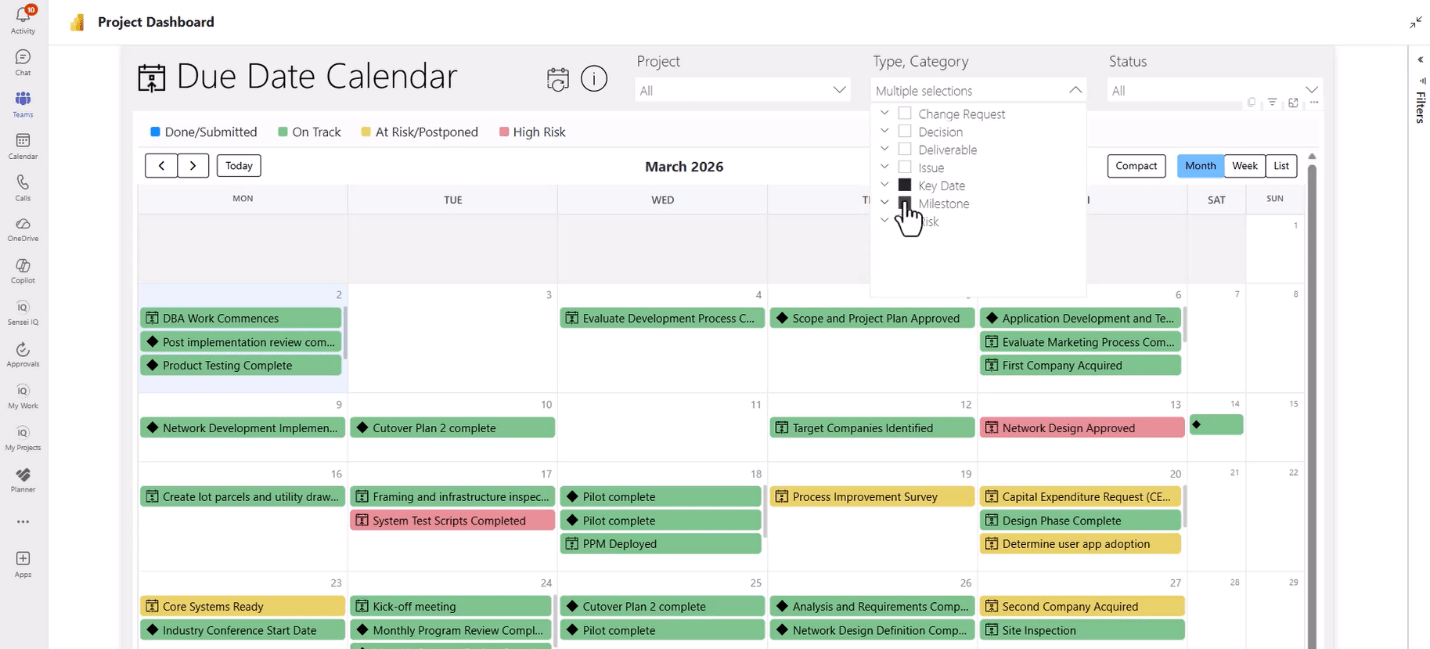
Perhaps I want to see milestones from the detailed plans and schedules like those in Planner, Microsoft Project, Smartsheet and so on. Of course, we can also monitor risks, issues, deliverables, change requests, and decisions here.
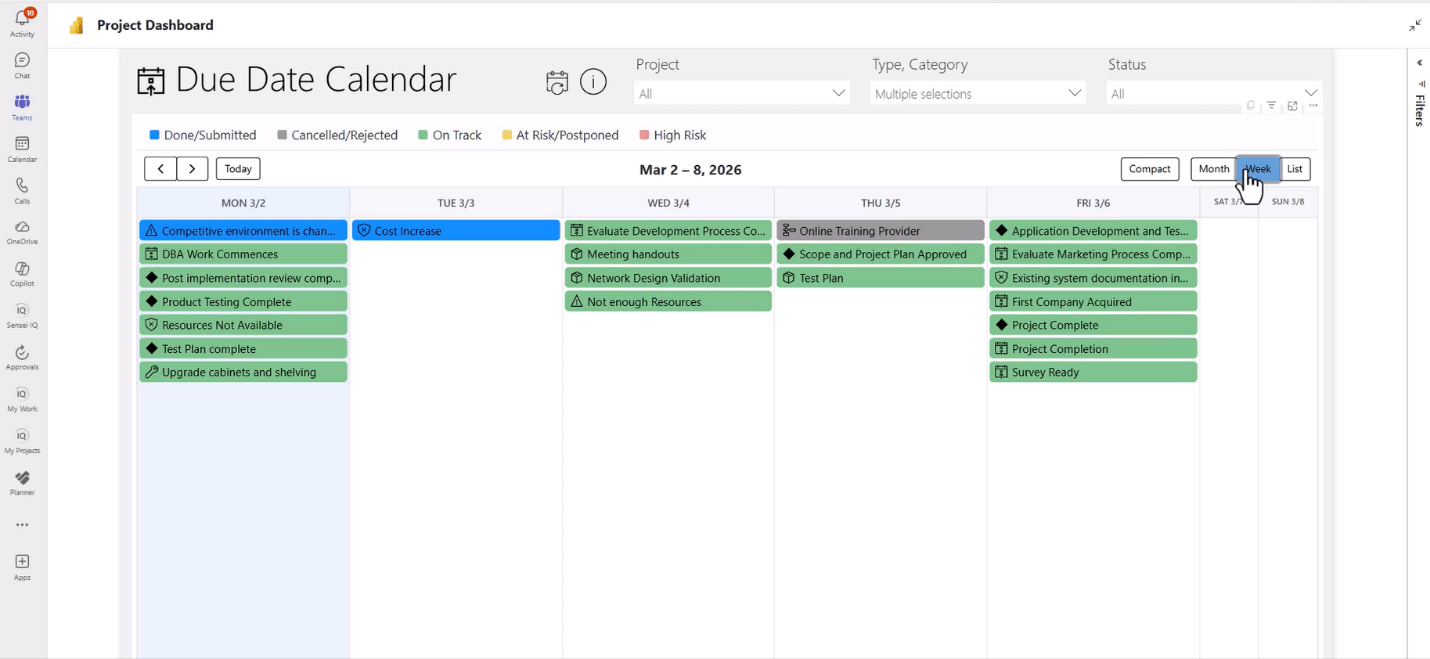
If you have a lot of data, the weekly view may be more appropriate. Another good option is the List view, which includes additional supporting information directly in the view without needing to open each item.
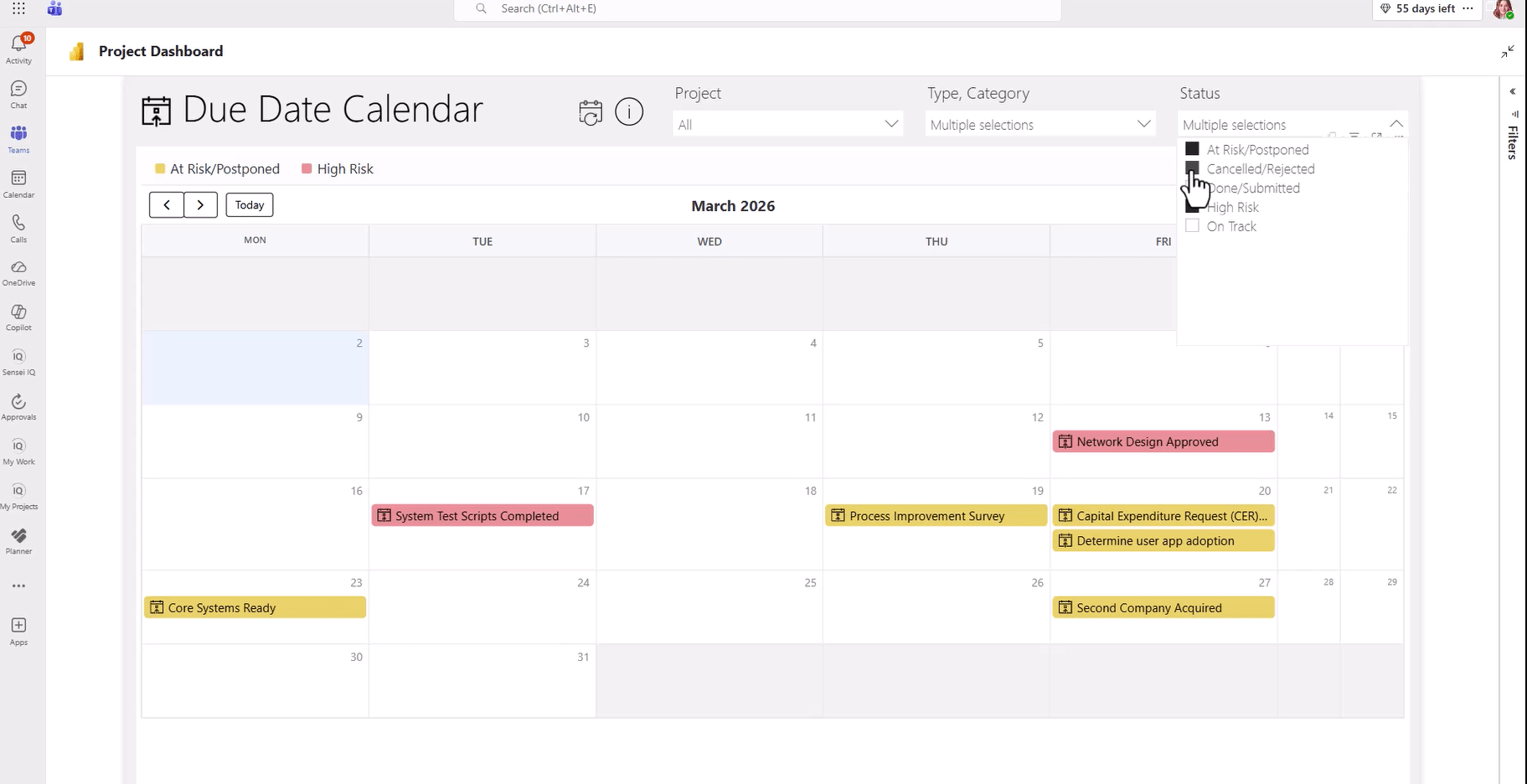
Filtering for status allows you to focus on high risk, at risk, postponed, cancelled, and rejected items. It’s also easy to filter for a specific project, or project type, department, program, or sponsor. An added benefit is that, if executives rely on these types of exception reports, project teams are more likely to keep the data up-to-date because they know exceptions are being monitored.
Contact us: info@senseiprojectsolutions.com .